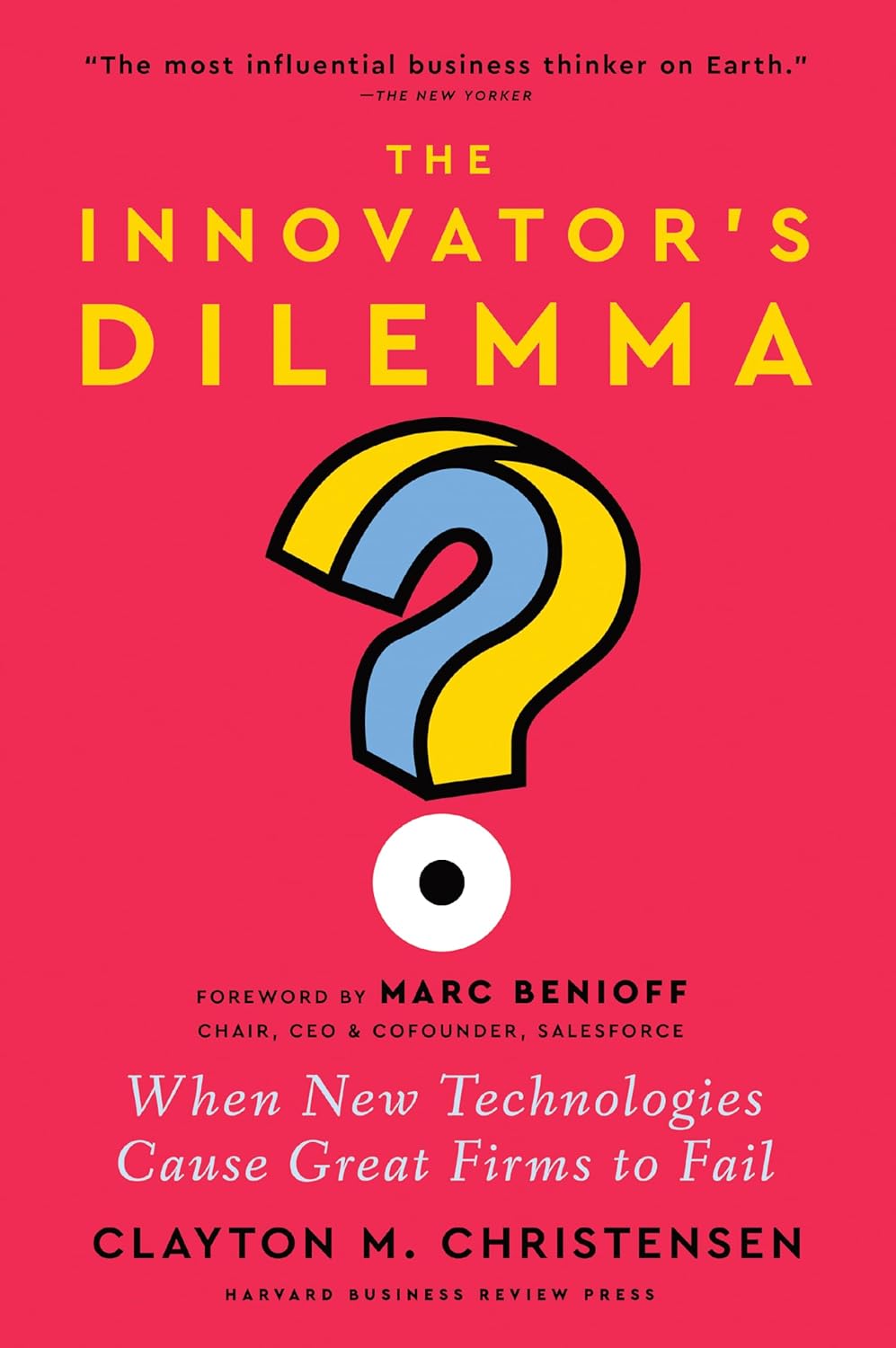
Clayton Christensen explains a paradox at the heart of business success: the very management practices that make companies strong—listening to customers, investing in profitable improvements, and optimizing existing products—can cause them to miss the next wave of innovation. Disruptive technologies typically begin as simpler, cheaper, or lower-performance alternatives that established firms dismiss because they do not yet serve their best customers or largest markets. Over time, however, these technologies improve rapidly and ultimately reshape entire industries, leaving incumbents behind.
The book is compelling because it reframes corporate failure not as incompetence but as the predictable outcome of rational decision-making within successful organizations. Christensen illustrates this dynamic through vivid examples—from disk drives to steel mills—showing how small technological shifts can quietly undermine industry leaders. More than two decades later, the framework remains highly relevant, offering a powerful lens for understanding modern disruptions in fields such as software, media, transportation, and artificial intelligence.